
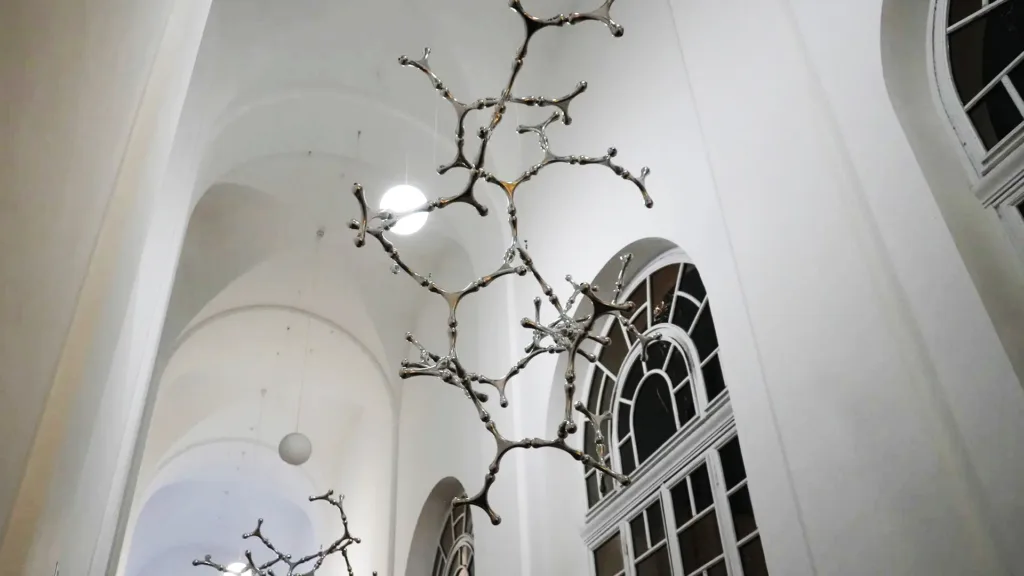
Loris Cecchini’s Waterbones (the social diagram) enters the permanent collection of the National Gallery of Modern and Contemporary Art
As of December 12, 2025, Waterbones (the social diagram), a monumental work by Loris Cecchini, has become part of the permanent collection of the National Gallery of Modern and Contemporary Art. The sculpture will be permanently installed in the connecting corridor between Sectors 3 and 4, in dialogue with important figures of contemporary Italian sculpture such as Sergio Lombardo, Eliseo Mattiacci, Pietro Consagra and Francesco Lo Savio.
The acquisition marks a significant development in Cecchini’s artistic research, owing to the strongly participatory nature of the work. The project originated from a collaborative art initiative supported by Il Museo Rigenera, promoted by the Directorate-General for Contemporary Creativity of the Ministry of Culture, and developed in collaboration with the Third Sector organisation Amici di Edoardo.
The modular sculpture was initially created in Milan through a collective process involving the artist and young people from the Barona neighbourhood. The work was presented at Centro Sociale Barrio’s, in Piazza Donne Partigiane, from October 30 to December 1, 2025. Through workshops, educational activities and opportunities for discussion, the initiative engaged the local community with the aim of bringing new audiences closer to contemporary art. The project involved more than 600 direct beneficiaries—including students, teachers, families, volunteers and local residents—serving as a metaphor for a society founded on the appreciation of differences and a sense of community.
At a later stage, the artist revisited the work, modifying its structure and adapting it to the Gallery’s exhibition space.
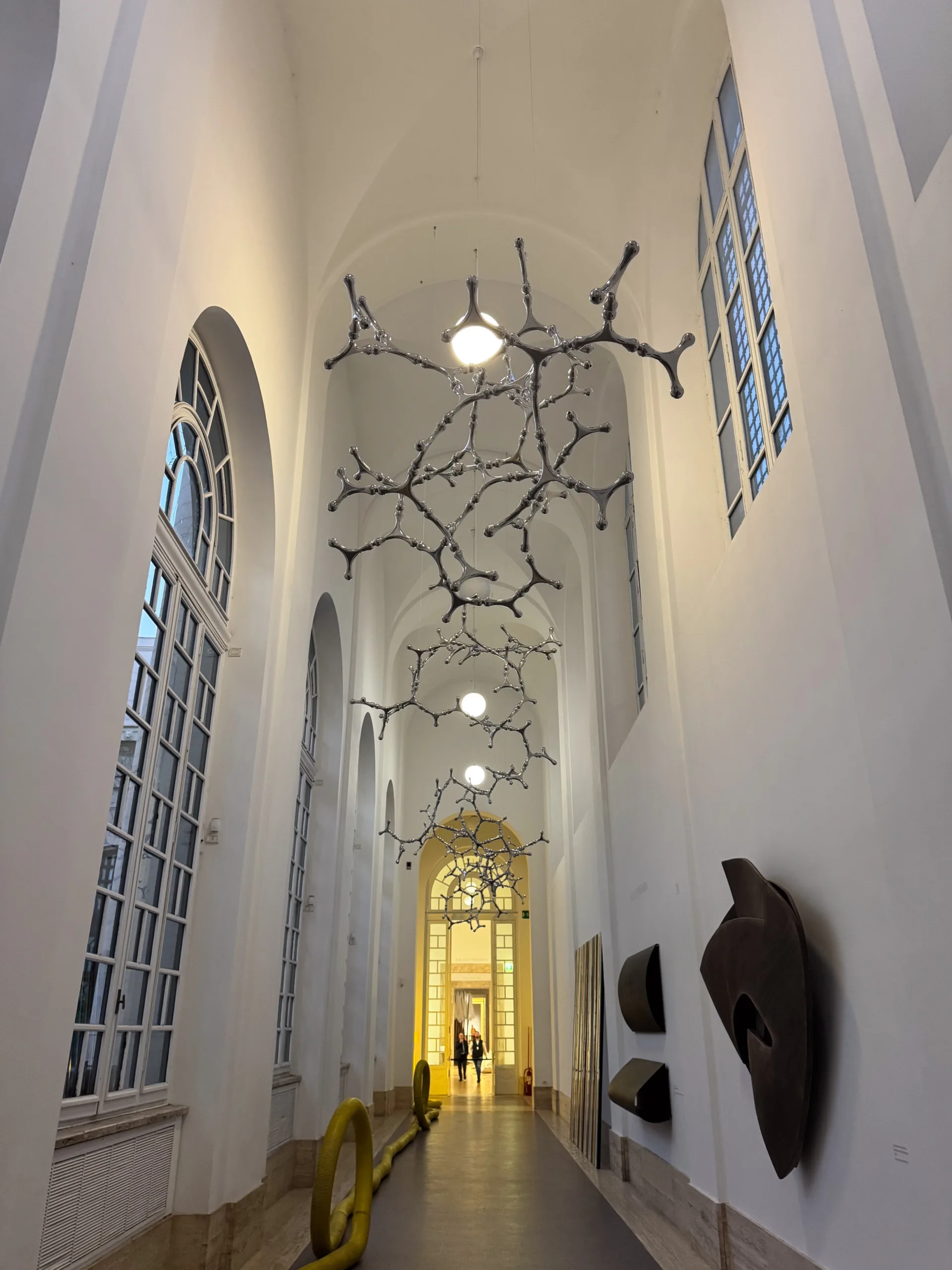
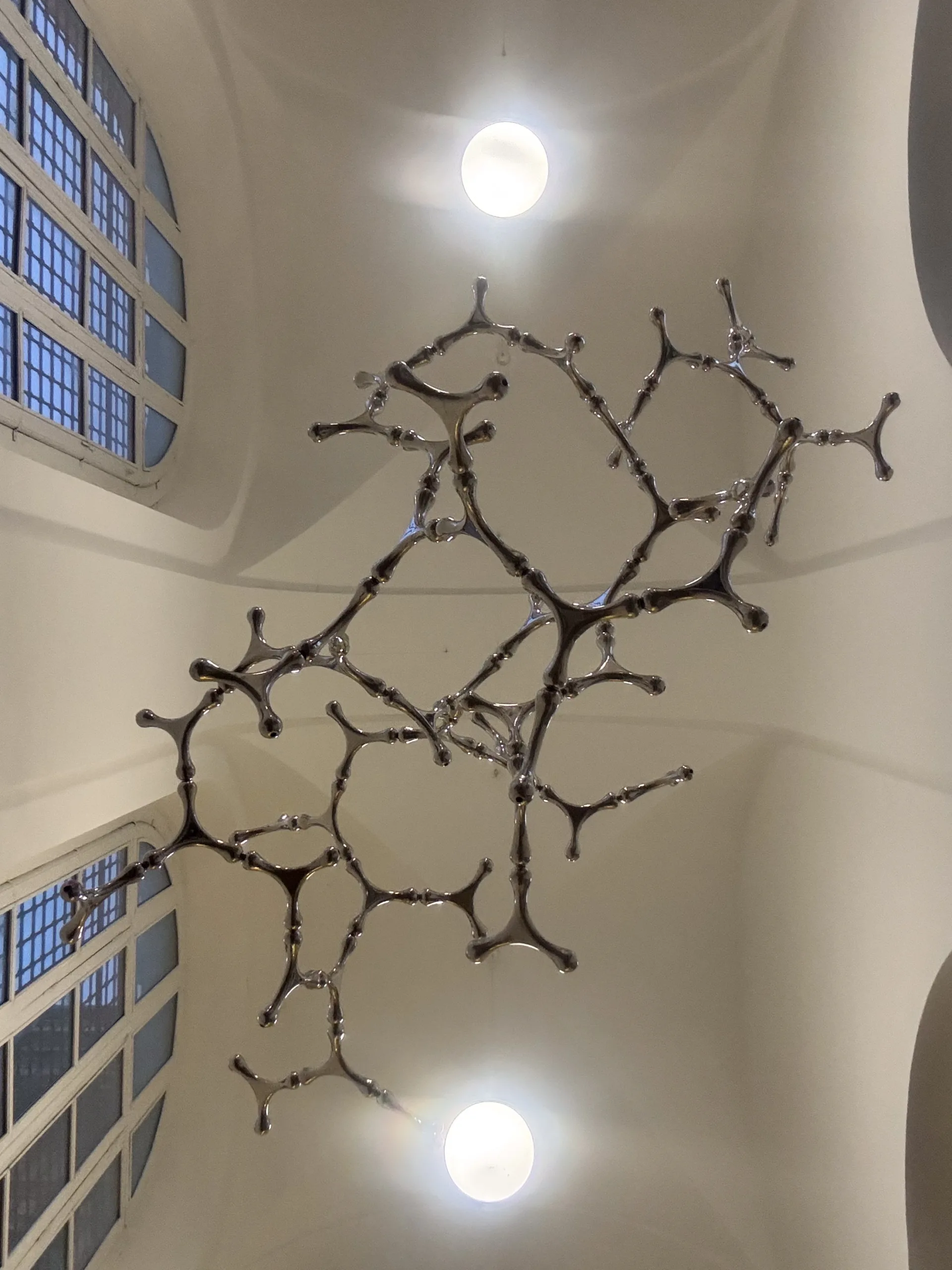
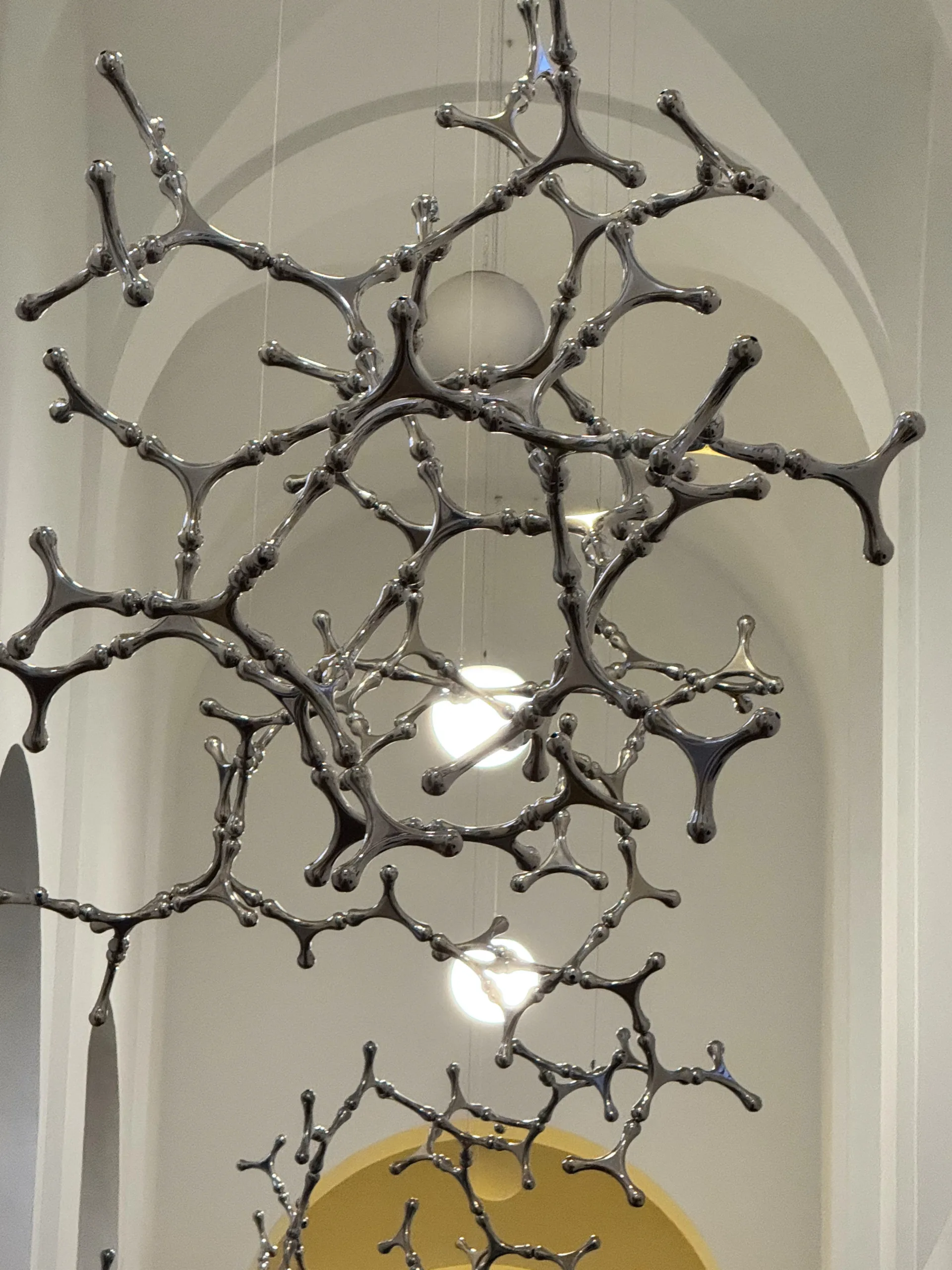
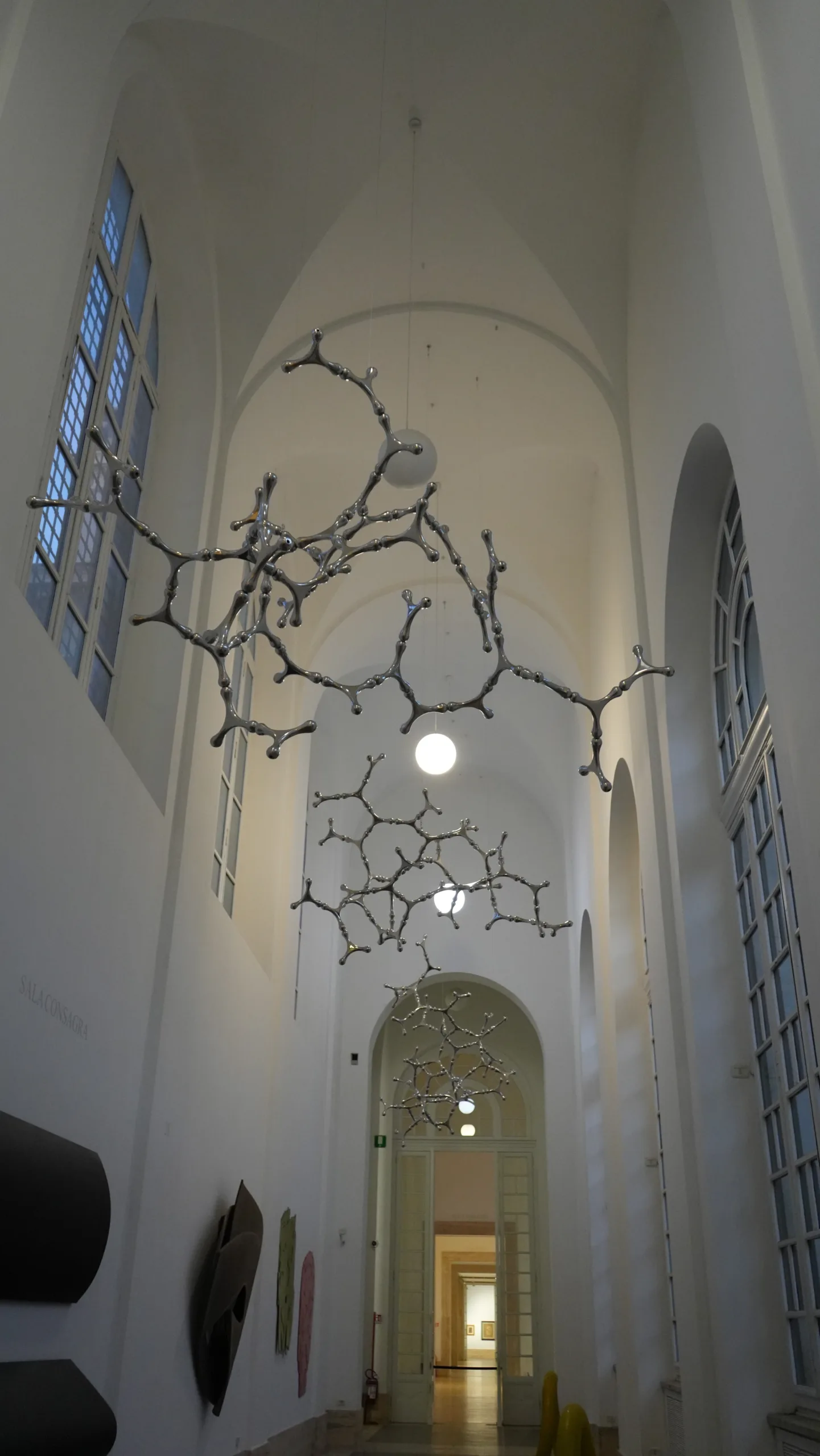
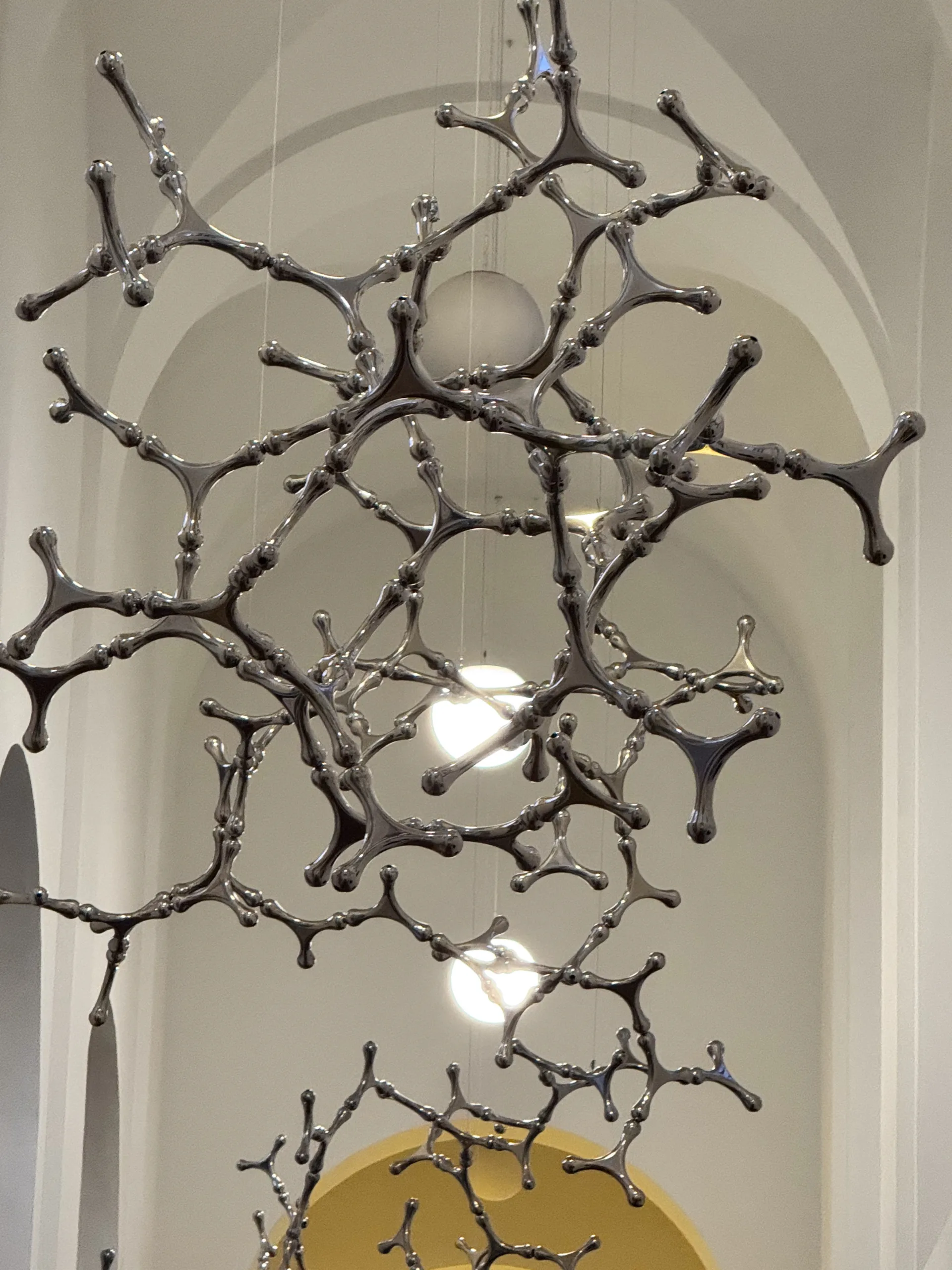
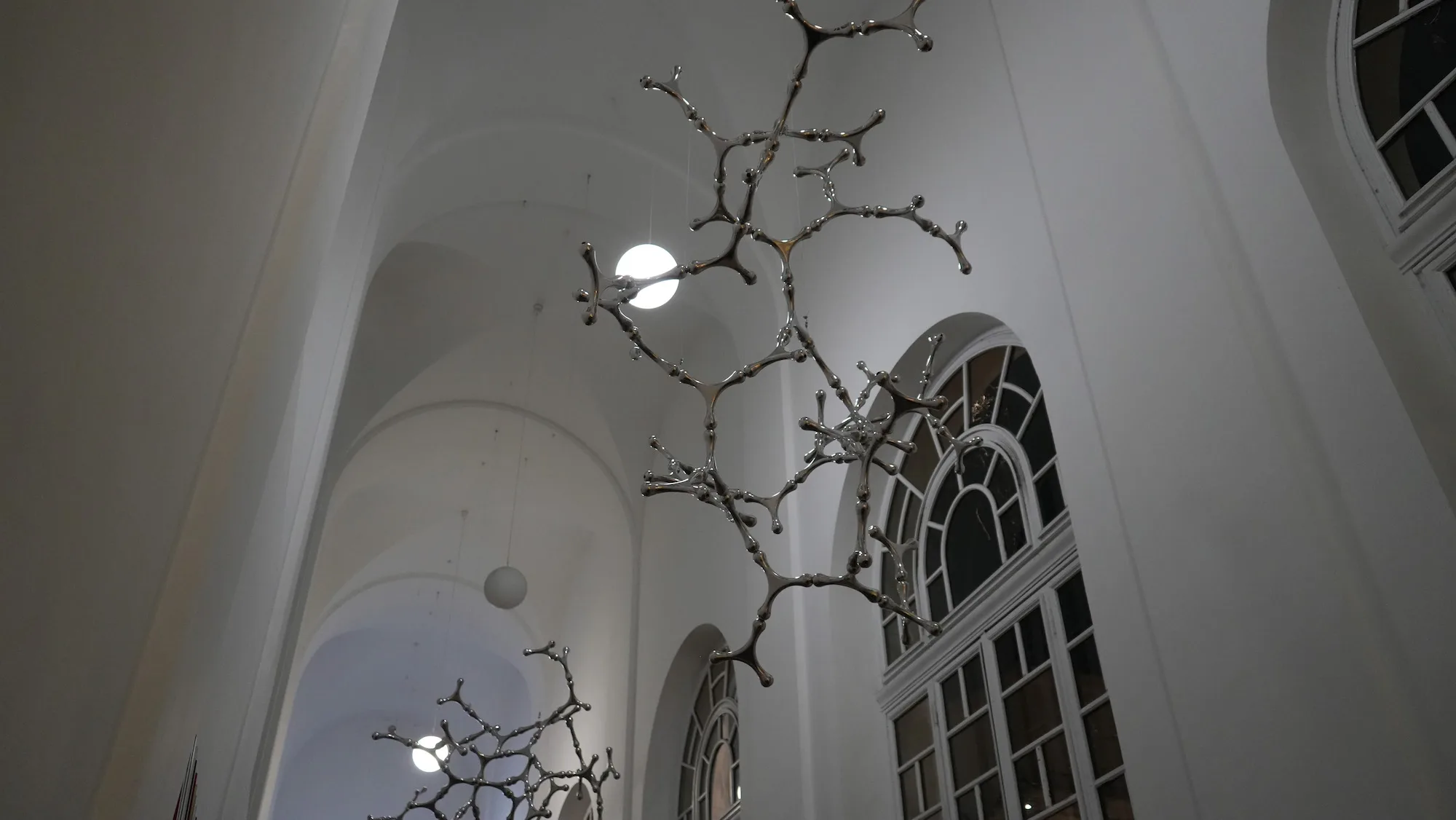
Initiated by Director Renata Cristina Mazzantini, the acquisition confirms GNAMC’s role as a museum attentive to contemporary creativity and as an active participant in processes of urban regeneration and social cohesion, particularly in peripheral areas. Suspended from cables anchored to the ceiling, the work consists of four clusters of mirror-polished 316 stainless-steel elements, screwed and welded together. Characterised by a strong cellular aggregation, the forms evoke analogies between micro and macro structures, as well as between natural and social systems, giving rise to a fluid and organic whole.
Cecchini’s sculptural practice develops in space through a constant relationship with its surroundings, evoking living surfaces and rhizomatic ramifications that grow without hierarchies, like organisms or communities in transformation. Following important installations at Roma Tre University and the Quirinal Palace, the inclusion of Waterbones (the social diagram) in GNAMC’s permanent collection marks a new chapter in the artist’s public career.
Waterbones (the social diagram)
National Gallery of Modern and Contemporary Art
Viale delle Belle Arti 131, Rome
The work is an integral part of the Gallery’s permanent exhibition route and is located in the connecting corridor between Sectors 3 and 4.